Call us today
1 (800) 275-0185

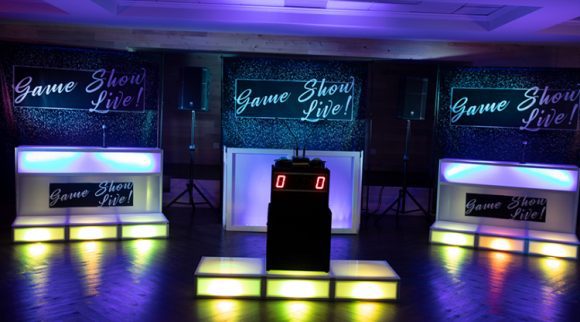
Of all the team-building formats out there, one consistently outperforms the rest: the Family Feud-style game show. It is the rare activity that works for every personality in the room, from the coworkers who love the spotlight to the ones who would rather disappear into it. No trust falls, no forced sharing, just two teams, a few survey questions, and a whole lot of laughing.
This post makes the case for Family Feud-style team building, why its built-in humor, clear rules, and easy spectator engagement make it a reliable winner, plus tips for writing question categories that flatter your office culture without going off the rails.

The premise is simple: two teams compete to guess the most popular answers to survey questions, buzzing in and racing to find the top response before they rack up three strikes. Everyone has seen it, so everyone gets it instantly. That familiarity is the foundation, but the reasons it wins for team building go deeper.
The format is funny by design. Survey questions surface surprising, absurd, and weirdly revealing answers, and watching a teammate buzz in with total confidence and a completely wrong guess is comedy no scripted activity can manufacture. The laughter is shared and good-natured, which breaks down tension fast, and nobody has to be the designated funny person for it to work. The fun happens on its own.
Almost everyone has seen the show, so there is no learning curve and no awkward five-minute rules explanation. Teams understand it the moment it starts, which means they relax and dive in immediately. Compare that to elaborate team-building exercises that need a facilitator, a worksheet, and a leap of faith, and the appeal is obvious. Less explaining means more playing.
A Family Feud-style show is as fun to watch as it is to play. The audience shouts answers, cheers good guesses, and groans at every strike, so even people who are not on stage are completely part of the action. That makes it ideal for larger groups, where everyone stays engaged whether or not they are holding a buzzer. There are no bored bystanders.
Because the goal is to guess the most common answers, not the smartest or most obscure ones, success comes down to gut instinct and shared experience rather than expertise or seniority. The brand-new hire is just as likely to nail the top answer as a senior executive, which is exactly the dynamic good team building should create. Everyone contributes, and no one feels outmatched.
The secret to a great corporate Family Feud-style show is the questions. The best ones celebrate your shared culture and earn knowing laughs without singling anyone out. A few categories that tend to land:
And a few rules to keep it on the rails:
Get the questions right and the show does the rest, turning your team’s shared experience into the heart of the entertainment.
The easiest way to run one is to let the pros handle it. Perfect Parties USA’s Survey Says is a turnkey Family Feud-style game show complete with a professional host, lockout buzzers, and a giant projection screen, and the deluxe version adds a full stage set with lights and glow podiums. Best of all, the survey questions can be customized and branded to your company, so the whole show flatters your culture from the first round. It is part of our full performers and shows lineup, and we handle the setup, the hosting, and the teardown so your team just shows up to play. Explore more team building options to round out your event.
Ready to get this party started? Contact Perfect Parties USA to talk to one of our Party Pros! Request a Quote

What is Family Feud-style team building?
Family Feud-style team building is a team activity based on the popular game show format, where two teams compete to guess the most popular answers to survey questions. It is hosted, fast-paced, and built around collaboration and friendly competition. The questions can be customized to your company, which makes it a favorite for corporate events.
Why is Family Feud good for team building?
Family Feud-style games are great for team building because they have built-in humor, clear rules everyone already knows, and easy spectator engagement, so the whole group stays involved. The format also levels the playing field, since guessing common answers rewards shared experience over expertise. It builds connection naturally, without forced icebreakers.
What questions should you ask in a Family Feud team building game?
Good questions celebrate shared office culture, like “Name something you will always find in the office fridge” or “Name something everyone secretly does during a video call.” Mix company-specific prompts with universal pop-culture and everyday topics so everyone can play. The best questions get knowing laughs without singling anyone out.
How do you keep a Family Feud team building game appropriate for work?
Keep it appropriate by punching at shared experiences rather than individuals, and by avoiding politics, religion, pay, and personal topics. Have HR or a neutral person review the questions, especially company-specific ones, and cut anything that could embarrass someone. The goal is to laugh with the team, never at a person.
How many people can play Family Feud-style team building?
A Family Feud-style show like Survey Says features around 10 active contestants at a time, with everyone else cheering as the audience and rotating in. Larger groups can be split into teams that take turns competing, so the whole company can participate. The format scales comfortably to almost any group size.
Is Family Feud-style team building good for large groups?
Yes. It is one of the best formats for large groups because the audience is just as engaged as the contestants, shouting answers and cheering throughout. You can rotate teams through rounds or run a bracket so everyone gets a turn on stage. No one ends up sitting on the sidelines bored.
Where can I rent a Family Feud-style game show?
Perfect Parties USA offers a turnkey Family Feud-style game show called Survey Says, complete with a professional host, lockout buzzers, a giant projection screen, and customizable, branded questions. The team handles delivery, setup, hosting, and teardown. Reach out for a custom quote for your corporate event or team-building day.
Contact Perfect Parties USA to talk to one of our Party Pros!