Call us today
1 (800) 275-0185


Planning a carnival and trying to figure out how many games to book? It is one of the most common questions organizers ask, and getting it right matters. Book too few and you end up with long lines and restless guests; book too many and you waste budget on booths nobody reaches. Fortunately, there is a simple ratio that lands it almost every time.
The quick answer for a 200-person event: plan about 8 to 10 carnival games. That comes from the standard planning ratio of one game per 20 to 25 guests for steady play. Below, we break down the full ratio, the factors that adjust it, and sample lineups for 100, 200, 300, and 500 guests so you can plan with confidence.
The rule of thumb is one carnival game per 20 to 25 guests for steady play. At that ratio, lines stay short, usually just a few minutes, and there is always a booth open, so guests keep playing instead of waiting. To use it, simply divide your guest count by 20 to 25.
For a 200-person event, that math works out to 200 divided by 25 for the lean end and 200 divided by 20 for the busier end, giving you a target of 8 to 10 games. If your budget is tight or your event is short and casual, you can stretch the ratio to one game per 30 to 40 guests and accept slightly longer lines. For a premium feel with almost no waiting, aim for the lower end of the range.
The ratio is your starting point. A few details about your event push the number up or down:
Here is how the ratio translates into real lineups at common event sizes:
| Guests | Games (1 per 20 to 25) | Typical event |
| 100 | 4 to 5 | Small party or classroom carnival |
| 200 | 8 to 10 | School carnival or company picnic |
| 300 | 12 to 15 | Large school or community event |
| 500 | 20 to 25 | Festival or town-wide celebration |
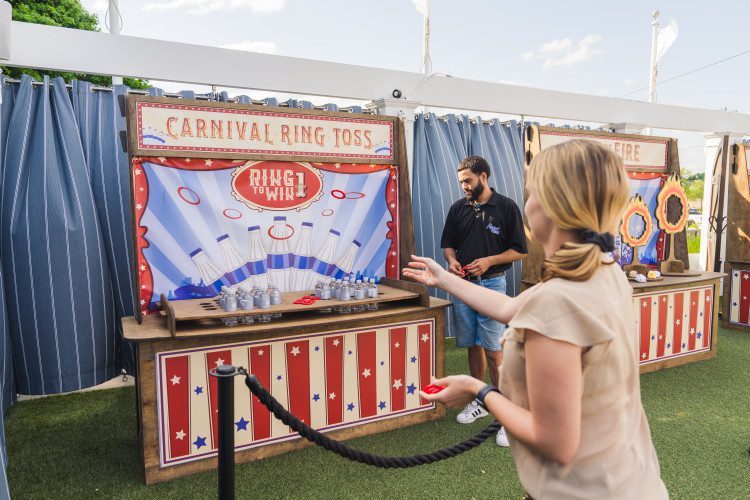
At one game per 20 to 25 guests, a 100-person event needs about 4 to 5 games. A balanced starter lineup covers the main play styles: Ring Toss and Bean Bag Toss for simple skill, Plinko for chance, a Duck Pond for the youngest guests, and Skee-Ball for repeat-play fun. That keeps every age busy without crowding a smaller venue.
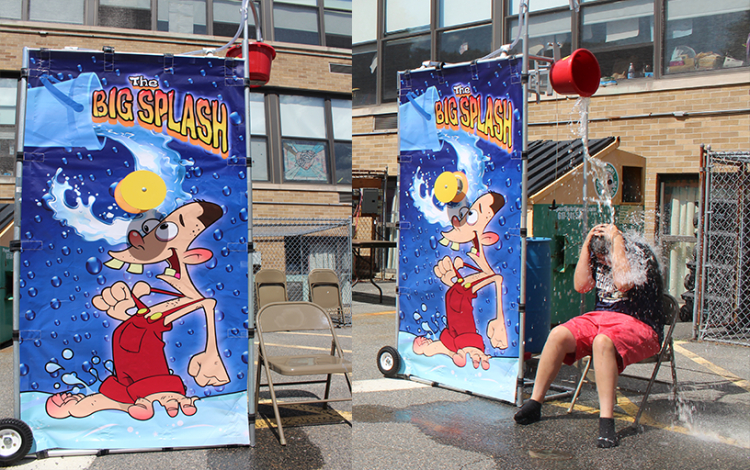
A 200-person event, the sweet spot for many school carnivals and company picnics, calls for 8 to 10 games. Build on the 100-guest lineup by adding Balloon Darts and Spill the Milk for classic midway action, Knock a Block for another quick toss, and a feature like The Carnival Claw for a high-value draw. The extra variety keeps lines short across a wide age range.
At 300 guests, you are building a real midway of 12 to 15 games. Add skill and group games to the 200-guest lineup: Wacky Wire for a steady-hand challenge, Basket Toss for another toss option, Roll a Ball Horse Racer for a high-energy group race, and a warm-weather water game or two. At this size, a central ticket booth and a couple of attendants keep things flowing.
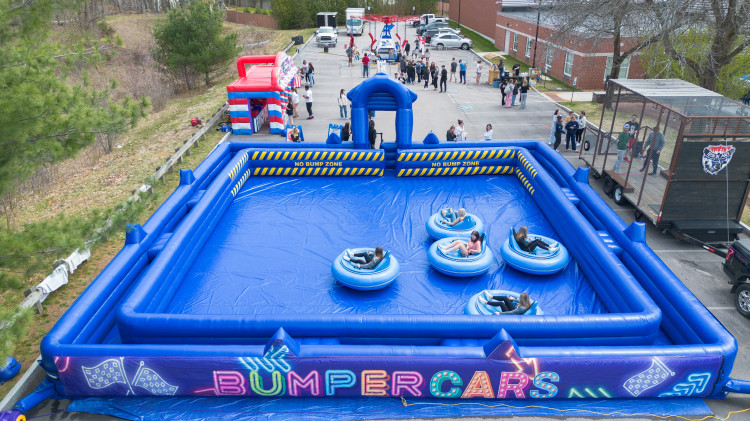
A 500-person event is a full festival, and 20 to 25 games create a midway that can handle the crowd. Spread a wide variety of toss, knockdown, skill, and water games across the space, including multiple high-throughput booths and coordinated sets like the Beach Boardwalk Carnival Stalls. At this scale, most events pair games with carnival rides and plan staffing, power, and ticketing well in advance.
These ratios are a reliable starting point, but the perfect lineup depends on the specifics of your event: your venue, your age range, how long it runs, your budget, and whether you also have rides or other attractions. Our planning team builds carnival lineups every day and will turn your details into a custom recommendation and quote. Just share your guest count, date, venue, and goals, and we will map out the right number and mix of carnival games for your event.
Ready to get this party started? Contact Perfect Parties USA to talk to one of our Party Pros! Request a Quote
How many carnival games do I need for a 200-person event?
For a 200-person event, plan about 8 to 10 carnival games. That follows the standard planning ratio of one game per 20 to 25 guests for steady play with short lines. Add a couple more for events longer than four hours, or if everyone arrives at once. Perfect Parties USA can recommend an exact lineup for your event.
What is the rule of thumb for carnival games per guest?
The rule of thumb is one carnival game per 20 to 25 guests for steady play and short lines. On a tighter budget or for a shorter, more casual event, you can stretch to one game per 30 to 40 guests and accept slightly longer lines. High-throughput games and other attractions like rides also let you run a bit fewer.
How many carnival games for 100, 300, or 500 guests?
Using the one-game-per-20-to-25-guests ratio: about 4 to 5 games for 100 guests, 8 to 10 for 200, 12 to 15 for 300, and 20 to 25 for 500. Larger or longer events trend toward the higher end of each range. A good mix of toss, knockdown, and skill games keeps every age engaged.
Does event length change how many carnival games I need?
Yes. Event length is one of the biggest factors. For events over four hours, add games or choose higher-throughput ones so guests are not replaying the same few all day. A short two-hour event can run closer to the lean end of the ratio, while an all-day festival should plan for more.
How do I avoid long lines at a carnival?
To avoid long lines, follow the one-per-20-to-25-guests ratio, favor high-throughput games like ring toss, Plinko, and balloon darts that serve 90 to 150 or more players per hour, and use a central ticket booth so buying tickets does not become the bottleneck. Spreading booths across the space also keeps any single line from getting long.
Should I have more games or a few big attractions?
A mix is best. A core of quick, high-throughput games keeps lines short and handles the crowd, while one or two feature attractions, like a claw machine or a big inflatable, add excitement and draw guests in. For most events, lean toward more quick games with a couple of standout features.
Can Perfect Parties USA recommend a lineup for my event?
Yes. Perfect Parties USA’s planning team builds custom carnival lineups every day based on your guest count, venue, age range, event length, and budget. Share your details and we will recommend the right number and mix of games, plus any rides or extras, and provide a quote.
Contact Perfect Parties USA to talk to one of our Party Pros!